
You may be doing SR&ED without knowing it
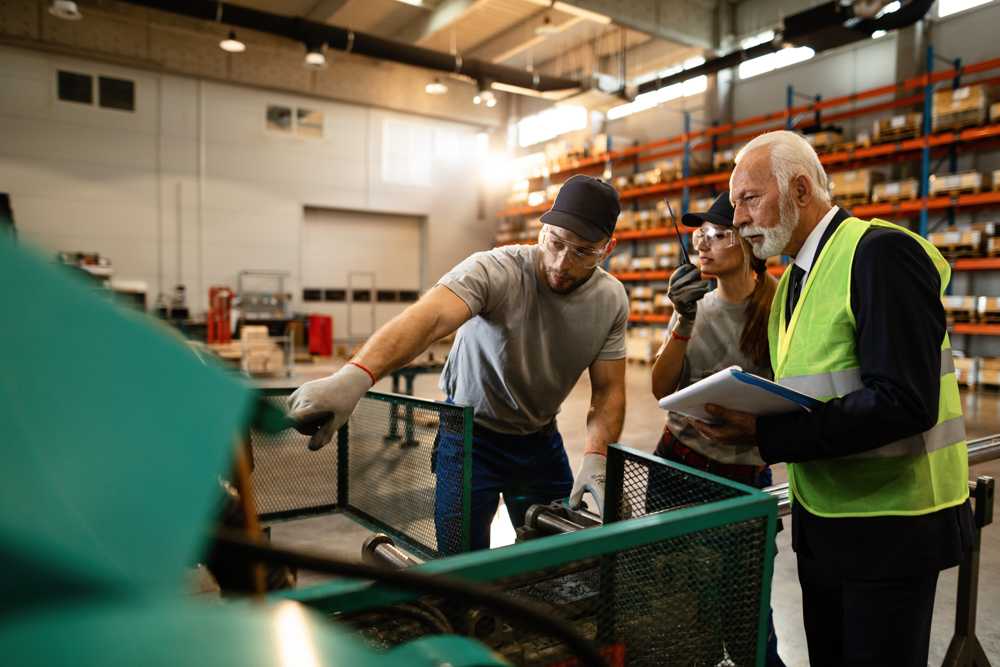
The decisive criterion is not the sector of activity. This is the nature of the work. If your team is facing scientific or technological uncertainty, formulating hypotheses, conducting tests, analyzing the results, and adjusting its approach, a Canada SR&ED eligibility analysis may be warranted.
Example 1 — Improving a manufacturing process
A manufacturing SME is looking to reduce defects on a production line. The usual methods do not give the expected results. The team undertakes tests by changing temperature, pressure, or speed parameters, documents the results, and builds a database that potentially becomes the essence of new processes.
This could make the activity eligible: the solution was not known at the beginning, the results were uncertain, the team followed an experimental approach to solve a technological problem and increased its knowledge in the field.
Example 2 — Developing proprietary software or algorithms
An SME develops an in-house tool to automate a complex process that cannot be handled by a standard solution. The team tests different architectures, encounters performance limitations, rewrites certain components and compares several technical approaches.
What could make the activity eligible: the project is not limited to configuring existing software. It involves real technological uncertainty and systematic investigation to solve a non-trivial technical problem. The team has pushed its knowledge and gained new ones as a result of the activities.
Example 3 — Reformulation of an agri-food product
An agri-food SME wants to reduce the sodium content of a product without altering the texture, preservation or taste. The first attempts failed. The team tests different concentrations, analyzes the interactions between ingredients and modifies the formulation.
This could make the activity eligible: the physico-chemical interactions are not entirely predictable and the company must experiment to achieve the desired profile, understand the impact of the variables in this specific case.
Example 4 — Integration of incompatible systems
A tech SME needs to make two systems that weren’t designed to work together communicate. The available specifications are incomplete, and the team must troubleshoot protocol, data, performance, or error handling issues.
What could make the activity eligible: Technical barriers cannot be solved by standard methods or existing documentation alone. The team must test several hypotheses to find a solution.
Example 5 — Construction technique under special conditions
A specialized SME is looking to adapt an installation method for a material used in harsh winter conditions. Known methods do not produce the expected performance. The team tests different surface preparations, application sequences and curing conditions.
What could make the activity eligible: Adapting to non-standard conditions can create technological uncertainty if the solution is not a direct result of established industry knowledge.
How to make an initial assessment
- Did you have any real technological uncertainty at the beginning?
- Have you tested several approaches to resolve this uncertainty?
- Have the trials, results and decisions been documented?
- Can the people involved and the time spent be traced?
- Did the work go beyond routine improvement or simple customization?
If the answers to the first questions are positive, it is best to have the file analyzed by an SR&ED consultant before ruling out the SR&ED potential. Many companies underestimate their eligible activities because they do not call them “R&D” in-house. To learn more about recoverable amounts, see our article on the SR&ED tax credit for SMEs.
Conclusion
SR&ED is not limited to large companies or laboratories. It can concern SMEs that innovate in their processes, products, software or technical methods. The challenge is to identify eligible activities, document them properly, and present them according to program expectations. Our complete guide to SR&ED claims details each of these steps.
Progrès Consulting offers a preliminary analysis to help Quebec and Canadian SMEs assess their SR&ED potential. If your teams are testing, adjusting, and resolving uncertain technical issues, there may be activities that may need further analysis.
Can a client-funded activity qualify?
It depends on the contract, the financial risk incurred and the ownership of the results. A case-by-case analysis is necessary.
Can the time of production employees be claimed?
Yes, if the time is directly related to qualified SR&ED and is reasonably documented.
Can an abandoned project be relevant?
Yes. Abandonment of a project does not automatically render the work ineligible. Pre-abandonment testing may be relevant if the SR&ED criteria are met.